

Religious Education
Welcome to R.E. at Bussage! At Bussage C of E Primary School, Religious Education (RE) plays a central role in our curriculum, reflecting our Christian foundation and supporting the spiritual, moral, social, and cultural development of all our pupils. We want them to be equip for the world and to flourish in it. Through RE, we aim to help children explore big questions about life, faith, and meaning, while developing respect and understanding for different beliefs and worldviews. As a Church of England school, our teaching is rooted in Christian values, while also embracing the diversity of religious and non-religious perspectives in our local and global community.
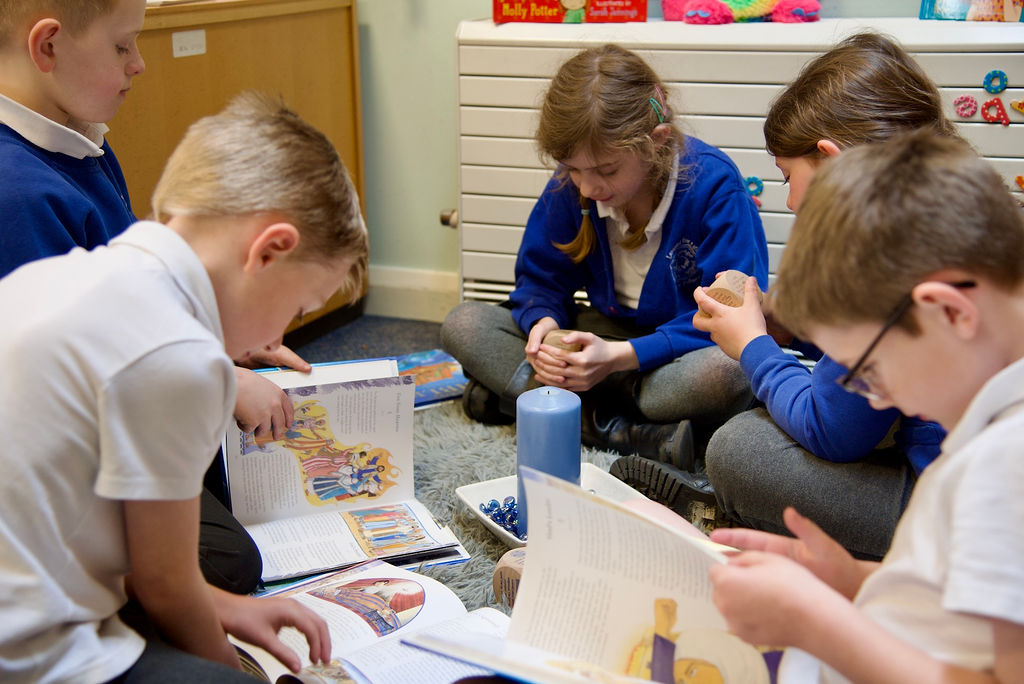
Our vision: We aim to create thoughtful, respectful, and compassionate individuals who can engage confidently with questions of belief and meaning. Through our RE curriculum, we aim to prepare children to live well with others in a diverse world, to develop their own sense of identity, and to make informed, ethical choices that reflect their values and beliefs.
The essence of all religions is one. Only their approaches are different. Mahatma Gandhi
What is a Theologian?
At Bussage, we believe a Theologian is:
- Curious and open-minded – asking thoughtful questions about faith, belief, and identity.
- Reflective – considering their own views and those of others with empathy and understanding.
- Knowledgeable – developing a rich understanding of religious texts, traditions, and practices.
- Respectful – showing kindness and acceptance towards people of all faiths and none.
- Thoughtful communicator – able to discuss and explain religious and philosophical ideas clearly.
- Culturally aware – recognising how religion influences communities, values, and traditions around the world.
Future Careers in Theology, Philosophy and Related Fields
Being a Theologian opens the door to many exciting careers, including:
- Teacher or University Lecturer in RE, Theology or Philosophy
- Clergy or Church Leader
- Community or Youth Worker
- Chaplain (in schools, hospitals, prisons, or the military)
- Social Worker or Counsellor
- Interfaith Adviser or Charity Worker
- Journalist or Writer on Ethics and Religion
- Lawyer (especially in human rights or international law)
At Bussage, we believe that RE builds transferable skills such as critical thinking, empathy, debate, and ethical reasoning that are valuable across many career paths.
Our Core Values in Religious Education
Our RE curriculum is rooted in our school’s Christian vision and four key cornerstones:
- Hope – encouraging pupils to reflect on meaning, purpose and future possibilities, developing a positive and thoughtful outlook on life
- Dignity – recognising the value and worth of every individual, showing respect for different beliefs and worldviews
- Community – fostering a sense of belonging and responsibility, understanding how belief shapes communities and relationships
- Wisdom – developing deep thinking, reflection and the ability to make informed, ethical choices
Through these core values, RE at Bussage supports pupils to grow spiritually, morally, socially and culturally, preparing them to live well together in a diverse world.
Our Religious Education Curriculum
At Bussage, our RE curriculum follows the Gloucestershire Agreed Syllabus for Religious Education. We ensure our teaching is broad, balanced, and reflective, enabling pupils to learn about Christianity in depth, while also exploring other major world faiths such as Islam, Judaism, Hinduism, and non-religious worldviews such as Humanism.
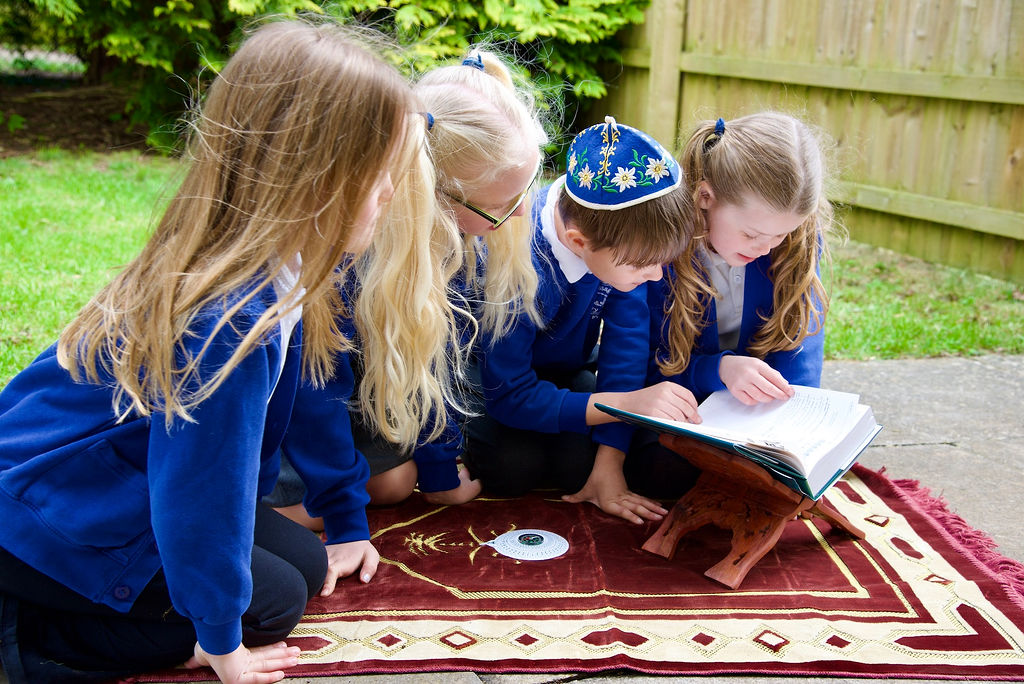
Gloucestershire Agreed Syllabus for RE - Extract
We enhance our RE lessons with engaging discussion, critical thinking, art, drama, visits to places of worship, and links with local faith leaders. We use carefully planned units that build progression across the school, encouraging pupils to ask meaningful questions and develop their own views with empathy and respect.
Ways of Knowing
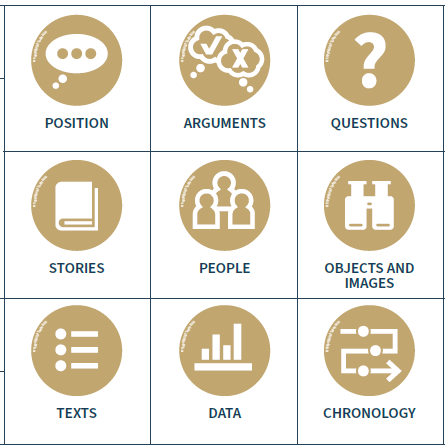
A key feature of the Gloucestershire Agreed Syllabus is the focus on “ways of knowing.” This means that pupils do not only learn about religions and worldviews, but also how we study and understand them.
Children are introduced to different ways of investigating belief, including exploring sacred texts, examining lived experiences, engaging in discussion and debate, and reflecting on their own ideas. This helps pupils to think critically, ask meaningful questions, and understand that there can be different answers depending on perspective and context.
Through this approach, pupils develop the skills to interpret, evaluate and respond thoughtfully to big questions about life, meaning and belief, while also growing in awareness of their own personal worldview.
Progression Through the School
Reception (EYFS):
In Reception, children begin to explore their sense of self and belonging. They encounter Christianity and other worldviews through stories, celebrations, and everyday experiences. Learning is play-based and focuses on developing curiosity, language and awareness of differences and similarities.
Key Stage 1:
Pupils build their understanding of Christianity alongside Islam, Judaism and Hindu traditions. They learn through stories, symbols, and key practices, beginning to ask questions about belief and meaning. Children start to recognise how religion influences people’s lives and communities.
Key Stage 2:
Pupils deepen their understanding of Christianity and study a wider range of worldviews, including Islam, Hindu traditions, Judaism and non-religious worldviews such as Humanism. They explore similarities and differences in belief and practice, engage in discussion and debate, and reflect more critically on their own ideas and values.
Please find below our 'Big Questions' and 'Target Memories' for Religious Education across the school:
Bussage CofE Primary School - RE - Big questions and target memories